

Understanding Broken Authentication & Session Management in the OWASP Top 10


Did you know a staggering 113 million websites contain at least one security vulnerability? That’s approximately six percent of all websites globally.

A website vulnerability is a weakness in code or configuration that cybercriminals can exploit to gain unauthorized access to a site, and certain issues, like broken authentication and session management vulnerabilities, can expose entire accounts to attackers. A mere one vulnerability has the power to impact over 1,000 pages on a single website.
Broken authentication and session management is one of the most common vulnerabilities on the OWASP Top 10 list. Simply stated, it refers to failures in verifying user identities or maintaining secure sessions, allowing a cybercriminal to steal a user’s login data or forge session data, such as cookies, to gain unauthorized access to websites. These issues often stem from inadequate credential controls or insecure session management practices.
What is the OWASP Top 10?
The OWASP Top 10, short for Open Web Application Security Project, is a list of the ten most dangerous web application security flaws today and serves as a widely accepted industry benchmark for understanding critical risks. According to owasp.org, its purpose is to drive visibility and evolution in the safety and security of the world’s software. The list is updated periodically to reflect emerging threats and trends, and as of 2025, broken authentication is now referred to as identification and authentication failures by OWASP.
What is broken authentication and session management?

Many websites require users to log in to access their accounts or make a purchase, often using a username and password. During this process, the application must verify the user’s identity and then securely maintain that identity throughout the session. With this information, a site will assign and send each logged-in visitor a unique session ID that serves as a key to the user’s identity on the server.
If these processes are not properly secured, a cybercriminal can impersonate a valid user and access that user’s account, resulting in a type of attack that exploits broken authentication and session management vulnerabilities. These vulnerabilities typically arise from weak credential protections, predictable or exposed session IDs, or session data that is not properly invalidated, all of which create opportunities for attackers to assume a user’s identity.
How can the authentication process be exploited?
When a user logs onto a website, the site generates a unique session ID. Because this identifier functions as a temporary key to the user’s identity, its security directly influences how protected the session remains. Their device then uses that session ID as a key to their identity for the remainder of their user session.
All of this information has to be sent back and forth between the user and the server. If that information is not encrypted and is sent as plain text instead, it becomes an attack vector. Hackers can then intercept user credentials or session IDs to impersonate that person. This exposure often increases on public networks, where attackers can more easily observe traffic or attempt session hijacking, such as in a coffee shop wifi environment or on a shared computer. The following are some broken authentication and session management attack examples.
Credential stuffing
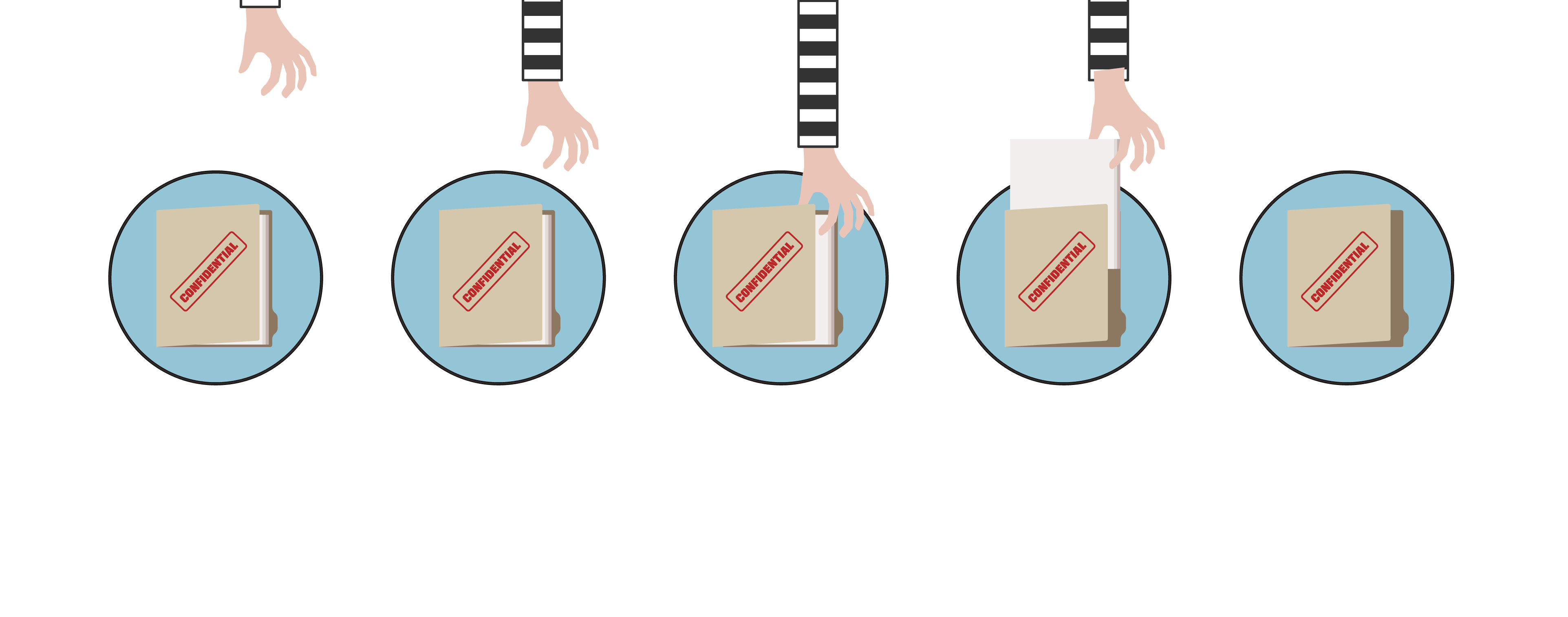
The stealing of usernames and passwords to gain unauthorized access to user accounts across multiple websites and services is known as credential stuffing. This technique relies on the fact that many people reuse the same login credentials across different online platforms.
Because leaked credentials are often traded or publicly exposed after data breaches, attackers can automate login attempts at scale, using these credentials across different websites in hopes of finding matches. Credential stuffing exploits the widespread issue of password reuse and can lead to unauthorized access to user accounts, compromising sensitive information, and leading to financial or reputational damage.
Brute force attacks
Another approach a cybercriminal could take is attempting a brute-force attack, wherein they repeatedly try common weak passwords to guess a user’s correct password. Attackers may also attempt to predict session IDs if the website uses low complexity or partially sequential values, making it easier to identify valid patterns.
For example, if an attacker intercepts several legitimate session IDs that are enumerated, it is possible to guess the next legitimate session ID and access the site fraudulently. These are commonly referred to as man-in-the-middle attacks, and they become far more dangerous when sites do not rotate or invalidate session IDs promptly.
Password spraying attacks
This type of cyberattack uses a single password against many user accounts before moving on to another password to avoid triggering account lockouts. This technique contrasts with brute force attacks, which try many passwords against a single user account. Password spraying targets the common use of weak passwords across multiple accounts and takes advantage of the fact that many users opt for simplicity over security.
Since authentication systems often monitor rapid failures rather than slow, distributed attempts, password spraying can bypass basic lockout protections, giving attackers an extended window of opportunity.
How to prevent broken authentication attacks
Explore below broken authentication best practices to protect user credentials and authentication processes from exploitation by bad actors. These steps strengthen both authentication controls and session management, which are the core components of preventing broken authentication and session management vulnerabilities.
Use an SSL certificate
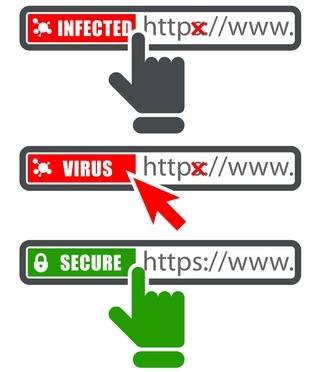
To prevent man-in-the-middle type attacks on your site’s sessions, it is important to encrypt this data in transit using an SSL/TLS certificate. As the name implies, an SSL (secure socket layer) / TLS (transport layer security) certificate encrypts information sent between a web server and a web browser. Using HTTPS across the entire website and enabling HSTS ensures all credentials and session IDs remain protected during transmission.
Enforce strong passwords
Regarding brute force attacks, mentioned earlier in this article, it’s a good practice to have access control and password policies for any and all registered users on a site, especially admin accounts.
Strong passwords do not have complete words; instead, they should consist of a combination of random letters (both uppercase and lowercase), numbers, and symbols to prevent users' passwords from being easily guessed. Minimum password lengths should also be required, and users should be required to update their passwords after multiple failed login attempts are detected.
Rate limiting login attempts, adding temporary lockouts, and requiring secure password recovery processes reduce attackers’ ability to test stolen or weak credentials.
Use a session manager
Implement a secure, server-side session management system that creates a new, random session ID with high complexity each time someone logs in. The session manager should rotate the session ID immediately after successful authentication and whenever a user’s privilege level changes, and it must ensure IDs are unpredictable and never exposed in the URL. Ensure the session ID is kept safe and is properly discarded following a user's logout, periods of inactivity, or after session timeouts. Shorter session lifetimes and automatic idle timeouts further reduce opportunities for attackers to exploit stolen tokens.
Conduct regular website security audits
Make sure you are on top of any website vulnerabilities or issues by conducting security audits on a regular basis. An automated website security plan is also helpful in that it continuously monitors the site for issues. Audits should confirm secure credential storage practices, such as hashing passwords with bcrypt or argon2 instead of storing them in plain text, and should identify any authentication endpoints vulnerable to automated attacks.
Use automated protections against bot driven attacks
Techniques such as behavioral analysis, IP throttling, and bot detection tools help defend against credential stuffing, password spraying, and other automated attack patterns that target authentication systems. These controls reduce unnecessary server load and limit attackers’ ability to rapidly test login combinations.
Prevent data breaches with SiteLock
In short, broken authentication and session management is a major security risk. It can allow a hacker to steal a user’s sensitive data or forge session data, such as cookies, to gain unauthorized access to websites. However, there are simple and easy solutions to prevent your site from being affected by this vulnerability.
SiteLock’s security tools monitor threats continuously and help identify authentication issues before they escalate. Learn more about protecting your site with our website security solutions. If your site has already been hacked, discover how SiteLock's website hack repair service can help. Fast remediation support ensures your website can return to full functionality while reducing the risk of recurring attacks.